Every year, the Active Transportation Alliance works with lawmakers to pass legislation that protects vulnerable road users and encourages sustainable transportation.
Laws and ordinances are needed to make it safer and easier to bike, walk, and use transit in the Chicago region and throughout Illinois, and throughout our existence we’ve pushed for improvements on that front.
Our legislative successes
2025
The NITA Act: Active Transportation Alliance led the coalition that was at the center of the effort to pass a comprehensive transit funding and reform package, to the tune of over $1.5 billion annually. The legislation not only averted drastic cuts to our transit system, but also it won large-scale reforms and improvements to the regional transit system, committing new resources to meet the moment and build for the future, and paying for it from funds that have historically been dedicated to roads. These were some of the strategies we pursued to support the legislation over a period of three years:
- Held lobby days in Springfield
- Hosted town hall meetings throughout the Chicago region
- Carried out public polling
- Met with the legislative sponsors weekly
- Mobilized our members, allies, and supporters to contact their lawmakers
All this meant that we literally had a seat at the table — with the Governor’s team and the House and the Senate leaders — to ensure that the legislation would focus on rider-centered solutions.
Safer intersections on state roads: Intersections on IDOT roads no longer must accommodate turning for the largest trucks on the road. Thanks to our multi-year effort, there is more space available at intersections for building meaningful protection for people walking and biking like pedestrian islands and sidewalk bumpouts.
2023
Chicago elections: We made walking, biking, and transit key issues in the 2023 Chicago municipal election. In partnership with the Transportation Equity Network, we hosted listening sessions with community-based organizations around the city to develop the platform. We distributed a candidate questionnaires and shared the results with supporters.
City transportation priorities: Newly elected Chicago Mayor Brand Johnson’s administration invited us to help develop the administration’s priorities around transportation. Alongside several other partner organizations, we were successful in getting our platform priorities adopted in the final transition report. The priorities included lowering speed limits, investing in dedicated bus lanes, and creating a connected and protected bike network.
Task force to eliminate traffic fatalities: Active Transportation Alliance worked with champions in the Illinois General Assembly to pass a bill that mandates the State of Illinois to create a task force that will draw up a set of policy recommendations to eliminate traffic fatalities in the state.
Fatal crash investigations: Active Transportation Alliance successfully lobbied Chicago City Council to pass an ordinance that requires a detailed investigation after a fatal crash to identify contributing factors.
2022
Fight against speeding: When an ordinance was proposed in Chicago City Council to raise the speed camera ticketing threshold near parks and schools, we joined forces with other safety advocates and successfully defeated the proposal.
Equitable transit-oriented development: Active Transportation Alliance helped gather support for landmark legislation to promote more development near transit within the city’s South and West Side neighborhoods. The legislation will encourage investment in affordable housing and businesses around public transportation.
Funding for public transit: Governor Pritzker signed a bill requiring regional planning agencies to work together on legislative recommendations that would ensure the public transit system remains financially viable over the long-term. The COVID-19 pandemic accelerated troubling trends of declining ridership and revenue for CTA, Metra, and Pace. Active Transportation Alliance supported this effort, which was led by Metropolitan Planning Council (MPC), by lobbying members of the General Assembly and testifying before House and Senate committees.
2021
Eliminating the Local Match for Walk/Bike Infrastructure: Illinois legislators passed a bill mandating that the state cover 100 percent of the cost of walking and biking infrastructure on state roads, just like they do for cars and trucks. Active Transportation Alliance championed the legislation along with Ride Illinois and the Metropolitan Planning Council, organizing advocates from across the state, testifying before House and Senate committees, and lobbying members directly. Previously, the state forced cities and towns to cover 20 percent of the cost of additions like sidewalks and bike lanes. This often led to this critical safety infrastructure getting stripped from final project designs, especially in low-income areas.
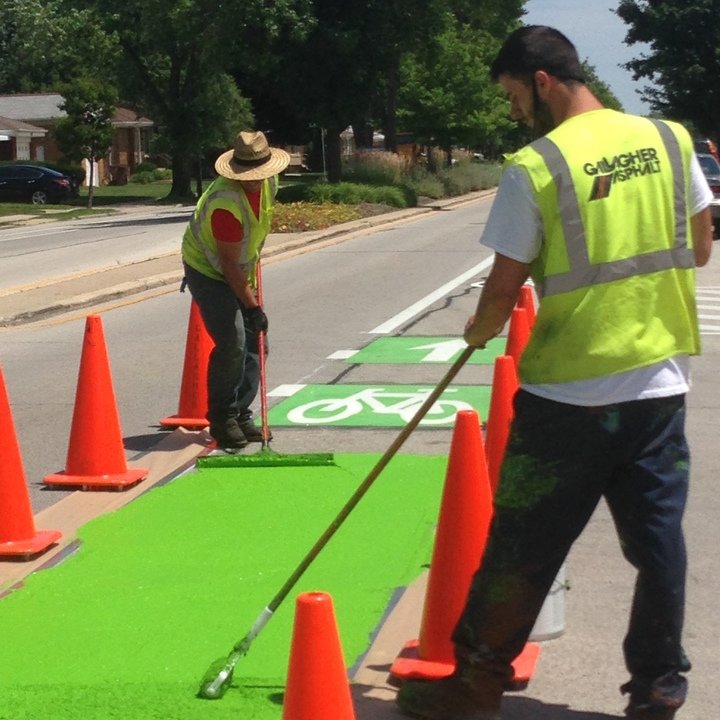
Spending gas tax revenue on walking and biking: Governor Pritzker signed a bill allowing the state and counties to spend gas tax funds on not just new roads but also walking and biking infrastructure like sidewalks and bike paths. Active Transportation Alliance supported legislators and counties who led the effort, testifying before House and Senate committees and organizing advocates to file witness slips before key votes.
Factoring equity and sustainability into transportation decision making: Governor Pritzker signed a bill requiring the Illinois Department of Transportation to use more transparent and equitable investment practices when making project decisions. The process must be data driven and consider criteria like access to jobs, emissions, safety, and equity. Active Transportation Alliance helped support the effort led by the Metropolitan Planning Council and the Civic Committee of the Commercial Club of Chicago.
2020
Keeping bike shops open during stay at home order: Governor Pritzker’s Stay at Home order in March 2020 identified bike shops as “essential businesses,” allowing them to stay open to support people biking for transportation to work and other daily destinations. This decision followed a recommendation from Active Transportation Alliance, Ride Illinois, the Illinois Retail Merchants Association, and more than 70 bike shops from across Illinois who wrote a letter to the Governor in advance of the order urging him to keep shops open.
Emergency assistance for transit: Congress provided two rounds of sorely needed emergency funding to help transit agencies survive the early stages of the COVID-19 pandemic and limit cuts to service. This included more than $2 billion for CTA, Metra, and Pace. As ridership hit record lows and tax revenue plummeted, Chicago-area transit agencies faced financial crises that could have forced dramatic service cuts. Active Transportation Alliance worked with partners across the region to activate thousands of transit riders to contact Congress, urging them to provide funds to help keep transit running for essential workers and everyone in the region who relies on it to get around. We lobbied members directly about the need and co-hosted several virtual events.
2019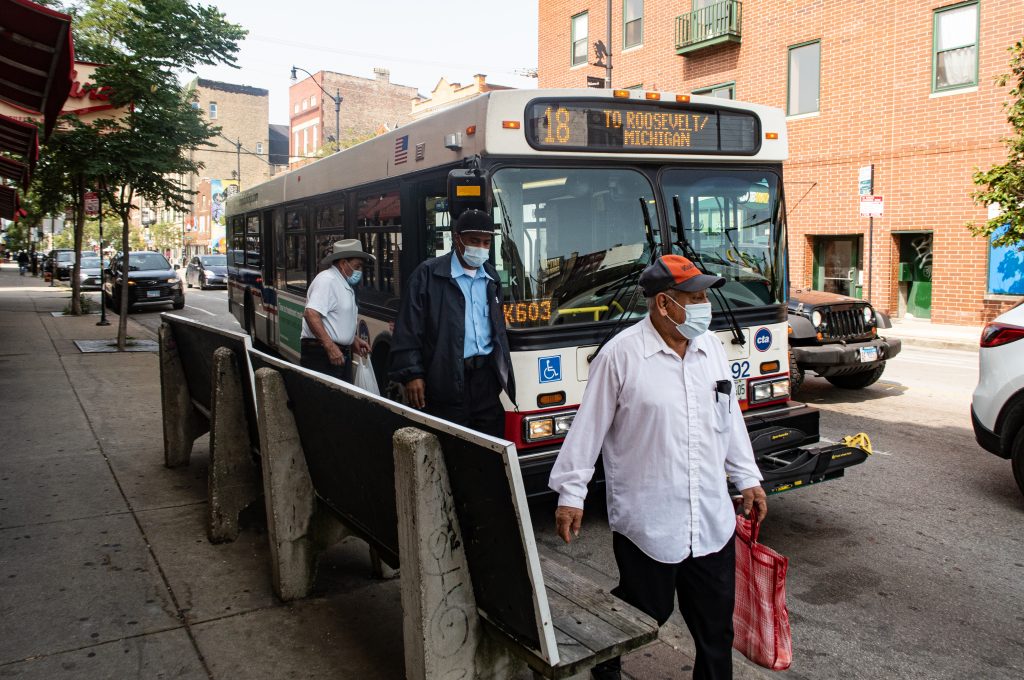
Congestion fees on Uber and Lyft: Mayor Lightfoot’s 2020 budget included new fees on Uber and Lyft, with a portion of the revenue going to expand the city’s Bus Priority Zones program. Specifically, the Mayor raised the fees on solo rides and decreased the fee on shared Uber and Lyft trips citywide. In addition, she added a surcharge on trips that start or end in a new “downtown congestion zone.” Active Transportation Alliance provided input on the policy as it was being developed and successfully lobbied for its passage.
Dedicated state funding for walking, biking, and transit: For the first time ever, Illinois’ long-term capital program includes dedicated funding for walking and biking projects. The new funding is part of a $33 billion, six-year transportation capital program. The bill includes $50 million annually for walking and bicycling projects. It also includes sustainable funding for public transit for the first time ever. Transit receives $4.7 billion over six years and $281 million annually in capital funds after that. Active Trans championed both initiatives with a bipartisan group of legislators in the Illinois State House and Senate.
Complete Streets Reform Resolution (SJR24): The joint resolution passed by the Illinois State House and Senate calls for the Illinois Department of Transportation (IDOT) to better protect people walking and bicycling on state roads. Active Trans spearheaded this resolution to demonstrate legislative support for IDOT reform, including advancing implementation of the state’s Complete Streets law and 2012 bicycle plan.
2018
Biking and Walking Education in Schools (Illinois HB4799): The legislation requires school boards statewide to adopt policies for educating K-8 students about biking and walking safety. Schools boards determine how best to implement the requirement in their schools. Active Trans helped draft and build support for the bill in Springfield, which passed both houses of the General Assembly and was signed into law by Governor Rauner in August 2018.

Bicycle Safety and the Dutch Reach (Illinois HB5143): The legislation amends the Illinois Vehicle Code to add information – including the Dutch Reach – about bike safety to the state’s Rules of the Road manual and driver’s license exam. Active Trans helped draft and build support for the bill in Springfield, which passed both houses of the General Assembly and was signed into law by Governor Rauner in August 2018.
Free-floating Car Sharing (Chicago Ordinance O2017-8622): This ordinance established a pilot program for free-floating car-sharing in Chicago. Users would access the cars via mobile app and the cars could be parked in any legal spot within a designated zone. Reservations aren’t required. Active Trans supported the ordinance because it would give people more transportation options and potentially lead to less driving and fewer cars on the road.
2017
Distracted Walking (Chicago Ordinance O2017-7839): This proposed ordinance would have fined people who are crossing the street while using a mobile device “in a manner that averts their visual attention to that device.” The fine would have been $90 for the first offense and $500 for the second. Active Trans helped defeat the proposal because it would have inappropriately redirected the onus from people driving to vulnerable people walking.
Truck Safety (Chicago Ordinance O2017-4837): This ordinance, approved by city council, requires city contractors to install specific safety equipment on large trucks, including mirrors to increase visibility of people walking and people biking for drivers, as well as lateral protective devices, also known as side guards, to decrease injury due to collision. Active Trans joined others in the bicycling community in calling on the city to strengthen its safety regulations for large vehicles.
Electric-assist Bicycles (Illinois SB0396): This law establishes a regulatory structure for electric assist bicycles (e-bikes) in Illinois and helps riders understand the new technology. It created three classes of e-bikes based upon the bike’s equipment and top speed. Active Trans supported the legislation and encourages local agencies to establish their own regulations around e-bikes on trails and streets.
2016
Transit TIF (Illinois SB2562): This bill, passed by the Illinois legislature, gives Chicago the ability to establish Transit Tax Increment Finance (TIF) districts around big improvement and expansion projects. Once established, CTA can use some property tax revenue in those areas to compile a mandatory local match while pursuing federal funding. Active Trans supported the bill and related Chicago ordinances to establish a district around CTA’s Red Purple Modernization project.
2015
Transit Future (Chicago Ordinance R2015-513): This approved ordinance codified the Chicago City Council’s support for Active Trans and the Center for Neighborhood Technology’s vision for transit expansion in Cook County.
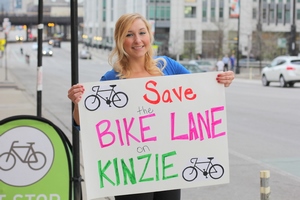
Kinzie Bike Lane: This Chicago ordinance would have forced the Chicago Department of Transportation to remove the Kinzie Street protected bike lane due to concerns about safety and congestion related to a new development. Active Trans helped defeat the ordinance by lobbying city council and mobilizing more than 1,400 people to write emails to council members.
Photo Enforcement Reform: This Chicago ordinance reforms Chicago’s photo enforcement program by requiring a community input process before installing new cameras, installing pedestrian countdown timers at every intersection where a camera is present, and convening a panel of university researchers to evaluate the safety impacts of the program. Active Trans supported the ordinance because it helped maximize the program’s safety impact.
2014
Bike Registration. Organized public response and fact sheet to help sink a Chicago City Council proposal to require a license and fee for bikes in Chicago.
2013
Bicycles May Pass Cars on the Right (Public Act 98-0485): This law clarifies that Illinoisans riding bicycles may pass slow-moving cars on the right side of the road.
Bicycle and Pedestrian Safety Ordinance. This Chicago ordinance includes a number of provisions for cyclists and pedestrians. Among them: allowing cyclists to ride two abreast; allowing cyclists to ride on sidewalks for short distances in order to access bike facilities (especially important for Divvy) and doubling fines for doorings.
2012
Child Safety Zone Ordinance: This ordinance allows Chicago to use automated safety cameras to ticket motorists exceeding speed limits. Speeding drivers pose a threat to cyclists and pedestrians.
2011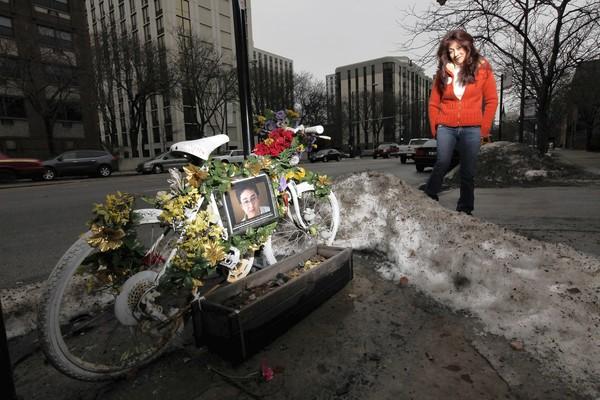
Roadside Memorials for Victims of Traffic Crashes (Public Act 97-0108): This bill makes it easier to get a roadside memorial erected in memory of a cyclist or pedestrian who died in a traffic crash. It also increases fines for certain speeding violations to help fund Illinois’ victim/witness assistance centers.
Dooring Collisions as Traffic Accidents: This mandate from Illinois Gov. Pat Quinn requires IDOT to record doorings on Illinois traffic crash forms, thereby improving crash data.
2010
Must Stop for Pedestrians (Public Act 96-1165): This law requires motorists and cyclists to stop for pedestrians in crosswalks. Read Active Trans’ summary of the law and an FAQ about the law.
Lower Speed Limits (Public Act 96-0987): This law gives municipalities more control over the speed limits in their communities. Specifically, it allows municipalities to reduce a 35 mph speed limit to 25 mph in low-density residential communities.
Red Light Cameras (Public Act 96-1016): Red light cameras help catch motorists who break the law and endanger cyclists and pedestrians. This law sets standards for the use of red light cameras in urban areas.
Protecting Cyclists and Pedestrians from Harassment (Public Act 96-1007) This law makes it a crime to ride unnecessarily close to, toward or near a cyclist, pedestrian or equestrian. If the violation results in great bodily harm, the driver could be charged with a felony.
2009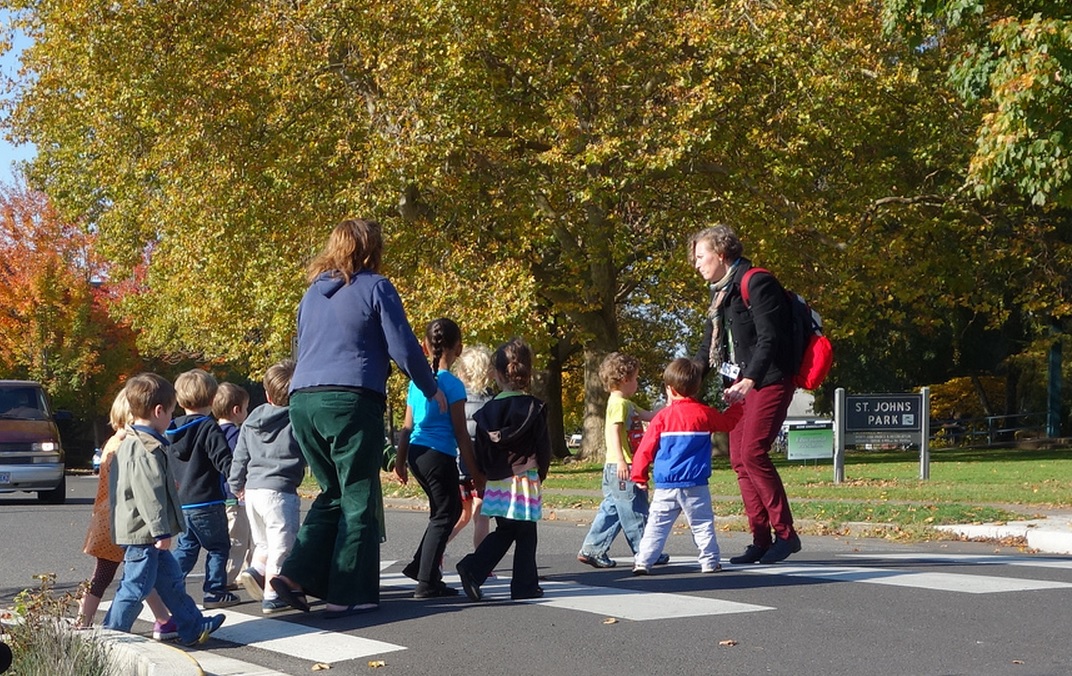
Distracted Driving (Public Acts 96-0130 and 96-0131): These laws prohibit Illinois drivers from text messaging or emailing while driving. It also prohibits using a mobile phone – even hands free – while driving in a highway construction zone or school zone.
School Safety (Public Act 96-0052): This gives schools more flexibility to use money they receive from speeding violation fines in school zones. Specifically, it will allow school districts to use that money for Safe Routes to School and School Safety Block Grant programs.
School Transportation Task Force (HJR 6): This establishes the Illinois School Transportation Task Force, which will study schools’ transportation habits and policies. The Active Transportation Alliance was chosen to sit on the task force.
2008
The 2008 Bicycle Safety Ordinance: This prohibits opening a door into moving traffic; sets a three-foot minimum passing distance; increases fines for parking in a bike lane or marked shared lane; and prohibits motorists from turning right in front of a bicyclist. The ordinance sets a minimum fine of $500 when these actions lead to a bicycle crash.
2007
Complete Streets (Public Act 095-0665): This law directs the state to establish pedestrian and bicycle accommodations in the planning and construction of all state road projects.
Bicycle Safety Amendments to the Vehicle Code (Public Act 095-0231): This law codifies the three-foot passing distance required of vehicles overtaking bicycles.
Bicycles as Emergency Vehicles (Public Act 95-0028): This law gives police and fire department bicycles emergency vehicle status, which allows officers to lawfully disregard traffic signals and directions in emergencies.
Reckless Driving in Crosswalks (Public Act 095-0467): This law sets higher penalties for violations in crosswalks.