
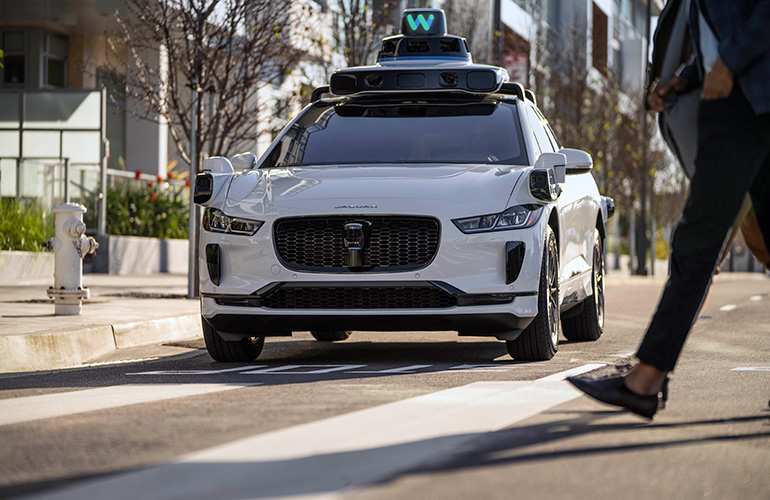
Autonomous taxis are in the headlines and they are likely to stay there for a while as one of the leading companies in the industry seeks to expand its service to Illinois.
Waymo has already started preliminary mapping of the Chicago streets, a key first step before deployment of their services.
Additionally, the Illinois General Assembly has taken up alternative pieces of legislation that would enable the company and others like it to operate on a pilot basis in the state, but there are competing visions on how the new technology should be regulated.
HOW WILL ROBOTAXIS IMPACT WALKING, BIKING, AND TRANSIT?
Active Transportation Alliance is working closely with partners in the Illinois General Assembly, local agencies, and allied organizations to understand the potential benefits and burdens of autonomous taxis in Illinois.
As we work together to draw up and put in place a robotaxi policy, our state has the benefit of learning from other parts of the country where policies have already been developed and real-world service deployed.
When it comes to the impact of autonomous taxis on our mission to promote walking, biking, and transit to create healthy, sustainable, and equitable communities, there are several key areas of concern any policy will need to address:
Safety: Autonomous taxi companies claim their automated driving systems are safer than their human counterparts. However, the actual evidence is inconclusive and ultimately, we will need a lot more data before a definitive answer can be provided.
This means that any autonomous taxi pilot program would need to include strong data sharing requirements, including information around any crashes or “disengagements”— situations where a remote operator takes over control of a vehicle.
The potential for robotaxis to contribute to safer streets, however, should not be dismissed out of hand and will be an important factor to consider when weighing the options for regulations.
PHOTOS: I went hunting for the Chicago Waymo fleet and found them in a parking garage near the Thompson Center.
— Tyler Pasciak LaRiviere (@tylerplariviere.bsky.social) February 24, 2026 at 7:51 PM
Congestion: Automated taxis do not address street congestion that is inherent in any car-based transportation system in a dense urban area. It’s a simple matter of geometry. Buses and trains are far more efficient at moving large numbers of people. Autonomous taxis do not change this equation.
Recent history shows us that ride hailing services like Uber or Lyft led to dramatic increase in congestion in Chicago.
Will autonomous taxis continue circulating while unoccupied? If not, where will they be staged until activated?
More cars on the road will degrade the quality of life, our quality, and the functioning of transit. And while all current autonomous taxi platforms use electric cars, there is still an impact on environmental quality (e.g. particulates from rubber tires).
Impact on transit: Increased congestion can have a direct impact on the reliability of bus service and ultimately can make transit a less attractive option for people who may be able to choose other alternatives. By competing with transit service, autonomous vehicles could harm the overall health of our transit system — on the heels of the state passing historic transit funding and governance reform legislation.
On the other hand, in less dense areas where traditional rail or bus service may be harder to implement, autonomous taxis could fill a gap for people who are unable or unwilling to drive. Lawmakers should prioritize autonomous taxi regulations that complement legacy transit service rather than undermine it.
Accessibility: Autonomous taxis can impact accessibility in several ways. In terms of accessibility for people with disabilities, there are varying impacts depending on an individual’s circumstances.
For example, a blind person may find autonomous taxis can provide an unprecedented amount of independence. However, for people who use wheelchairs or other mobility aids that may require vehicles designed to accommodate these devices or assistance to be secured in place, autonomous vehicles may not be accessible. Currently, there are no wheelchair accessible autonomous taxis on the market.
It will be important to also consider geographic equity and accessibility for any new mobility service.
In recent years, the City of Chicago has prioritized equitable deployment of bike and scooter sharing in an admirable push to ensure all parts of the city can access these new mobility options.
Autonomous taxis that only operate in certain areas may exacerbate long-standing inequities in our transportation system. This will be another key aspect to grapple with as Illinois develops its autonomous taxi policy.
Beyond safety, congestion, impact on transit, and accessibility, here are a few other considerations that must be part of the conversation.
- Land use. The potential for robotaxis to further entrench car-oriented development patterns cannot be ignored.
- Labor. Ride hailing drivers are on the verge of unionizing in Illinois, a pro-union state. This and other labor considerations will be a big part of the policy and political puzzle that emerges.
- Use of data. Autonomous taxis rely on a suite of sensors and cameras that collect a significant amount of data. Privacy advocates will want to ensure that we are aware of how this data is used.
Waymo cars delivered to Chicago today, and the trucks are illegally parked in the bike lane 🙃
— Michael McLean (@mclean.bsky.social) February 24, 2026 at 12:40 AM
A ROBUST ROBOTAXI POLICY IS ESSENTIAL FOR ILLINOIS
Given these areas of concern, it’s important that we get the policy right before deploying autonomous taxis on our roadways.
We need a thoughtful, comprehensive policy development process that brings key voices and expertise to the table. We will need to ensure there are robust requirements for data sharing and data privacy.
And we will have to protect transit from harm as a new mobility option arrives on our streets.
Critically, Illinois must avoid the path taken by other states whereby local municipalities are banned from regulating autonomous taxi operators.
Cities like Chicago must be able to regulate the operation of these services on their streets, just like we do with traditional taxis and ride hailing. That means not only being able to regulate where they operate but also being able to assess fees to offset the impacts these operations may have on the city, such as congestion.
LEGISLATION UNDER CONSIDERATION
Already, the Illinois General Assembly is considering multiple pieces of legislation to regulate an autonomous taxi pilot program in Illinois.
- HB4663, sponsored by Rep. Kam Buckner, reflects many of the same elements we see in state policies where autonomous taxis are currently operating, including preempting the ability for local municipalities to regulate these businesses.
- HB4789, an alternative bill, provides a much more robust set of approval and regulatory measures while also empowering local municipalities to regulate autonomous taxis in a similar manner to taxis and ride hailing.
This is a big lift for Illinois in a single legislative session. Government officials, advocates, and residents all deserve the opportunity to educate themselves and evaluate the benefits and burdens of autonomous taxis before having them deployed on our streets.
We will continue to work with partners and stakeholders to ensure any new policy will ultimately lead to fewer cars on our roadways and prioritize the needs of people who walk, bike, and use transit.
Top photo courtesy of Waymo.