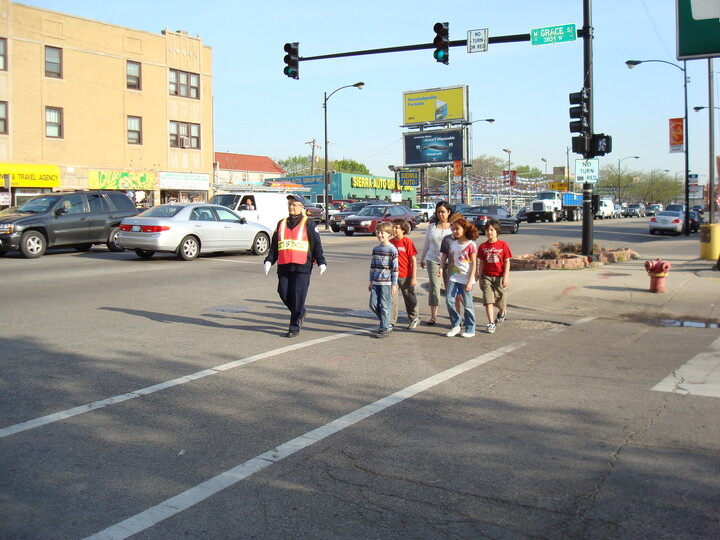
Speeding contributes to a huge number of deadly crashes in Illinois, and a small number of “super speeders” are disproportionately responsible.
Legislation now under consideration in the Illinois legislature (HB4948) addresses this issue by targeting extreme or repeat speeders with Intelligent Speed Assistance (ISA), a proven, life-saving technology that helps vehicles stay within the posted speed limit.
By ensuring speed limit compliance while allowing otherwise high-risk drivers to make daily trips, ISA provides a fair, commonsense solution that measurably reduces dangerous speeding and improves safety for everyone on the road.
Right now, we need your help in getting the Illinois Senate to pass this legislation. Will you ask your Illinois Senator to support HB4948?

THE TOLL OF SPEEDING DRIVERS IN ILLINOIS
Just like every other state in the union, speeding is a deadly AND widespread problem in Illinois. Indeed, the threat of speeding drivers is a daily reality for Illinoisans, impacting their safety, well-being, and quality of life.
- 299,133 crashes occurred on Illinois roads in 2023. Of those crashes, speed accounted for 37.1 percent of them. Speed accounted for 44.9 percent of deadly crashes and accounted for 36.3 percent of crashes causing injuries.
- Traffic crashes in Illinois are estimated to cost about $8 billion annually.
- In the City of Chicago, 70 percent of fatal crashes involve speeding.
HOW INTELLIGENT SPEED ASSISTANCE (ISA) WORKS
A “super speeder” is a driver who either speeds frequently or drives at extremely high speeds even occasionally—such as in drag racing or street racing.
Studies show a small group of repeat speeders are up to five times more likely to be involved in a serious or fatal crash.
These drivers pose a serious risk to everyone on the road, contributing to preventable crashes and fatalities. Traditional penalties often fail to deter them, making targeted interventions crucial.
Here’s how ISA can help
- Location-based speed recognition prevents vehicles from exceeding the posted speed limit
- Ensures compliance once the speed limit or a pre-set buffer, determined by the state, is reached, and the accelerator becomes unresponsive
- A temporary speed allowance button allows brief acceleration in specific emergency situations (e.g., avoiding a crash)
- Drivers are responsible for the cost. Low-income drivers may qualify for assistance.
- Only collects necessary data that supports key functions such as confirming compliance, evaluating program performance, as well as improving system accuracy and effectiveness
- Allows drivers to meet their daily needs without accumulating additional speed-related points or convictions
DETAILS ABOUT HB4948
- Program will be administered by the Illinois Secretary of State.
- Eligibility: People whose driver’s license has been suspended due to convictions for excessive speeding twice in a 12 month period, driving 26 miles per hour or more over the speed limit.
- Eligible drivers can elect to participate in the program or can be required to participate by a judge.
- The daily cost of the ISA device is about $4 to be paid to the vendor.
- Duration: Participants in the program will be issued a restricted driving permit that allows them to drive only vehicles equipped with the ISA device.
- Driver’s with their first 12 month suspension who enroll in the program and drive on a permit for 6 months without a violation will have their license suspension terminated.
- Driver’s with a second suspension who enroll in the program and drive on a permit for 12 months without a violation will have their license suspension terminated.
- Driver’s with a third suspension who enroll in the program and drive on a permit for 24 months without a violation will have their license suspension terminated.
- If a violation of the program requirements occurs, program enrollment will be extended.
A NATIONAL MOVEMENT TAKES SHAPE
Stop Super Speeders bills have already passed in Virginia, Washington, and the District of Columbia, with bills in well over a dozen more states progressing through state legislatures.
This technology was recently upgraded from a “studied” technology to a “best practice” technology by the US DOT and is widely recommended by the National Highway Traffic Safety Administration (NHTSA), the National Transportation Safety Board (NTSB), and the National Road to Zero Coalition.
- During benchmark road testing of fleets equipped with ISA devices in London, devices proved more than 99 percent accuracy, which was above the required 98 percent threshold.
- A study in the Netherlands showed that ISA could reduce the number of hospital admissions by 15 percent and the number of deaths by 21 percent.
- ISA is more effective than our current approach of suspending licenses, which 75 percent of drivers currently violate.
HB4948 will make our roads safer for everyone, including drivers, passengers, as well as those most vulnerable — people who are walking, biking, and using mobility devices. Please ask your Illinois Senator to support this life-saving legislation.
Thanks to Rudy Faust from Ride Illinois and thanks to Families for Safe Streets for providing resources in this blog post.