

Building a trail takes years of effort, with many pieces having to come together — from land acquisition to funding to building the trail itself.
That’s certainly the case with four new trail projects that community groups are pushing forward in the City of Chicago.
On a recent Chicago Advocacy Connect call hosted by Active Transportation Alliance, representatives from the Englewood Nature Trail, Bronzeville Trail, Crosstown Trail, and Weber Spur Trail told the story of each of their projects, including how they got to where they are and where they’re going.
“All these trails are very different,” said the Chicago Department of Transportation’s Lubra Benak during the presentation. “But they have one thing, I think, in common: they all take a very long time to deliver.”
Here’s the latest on these four projects:
THE CROSSTOWN TRAIL
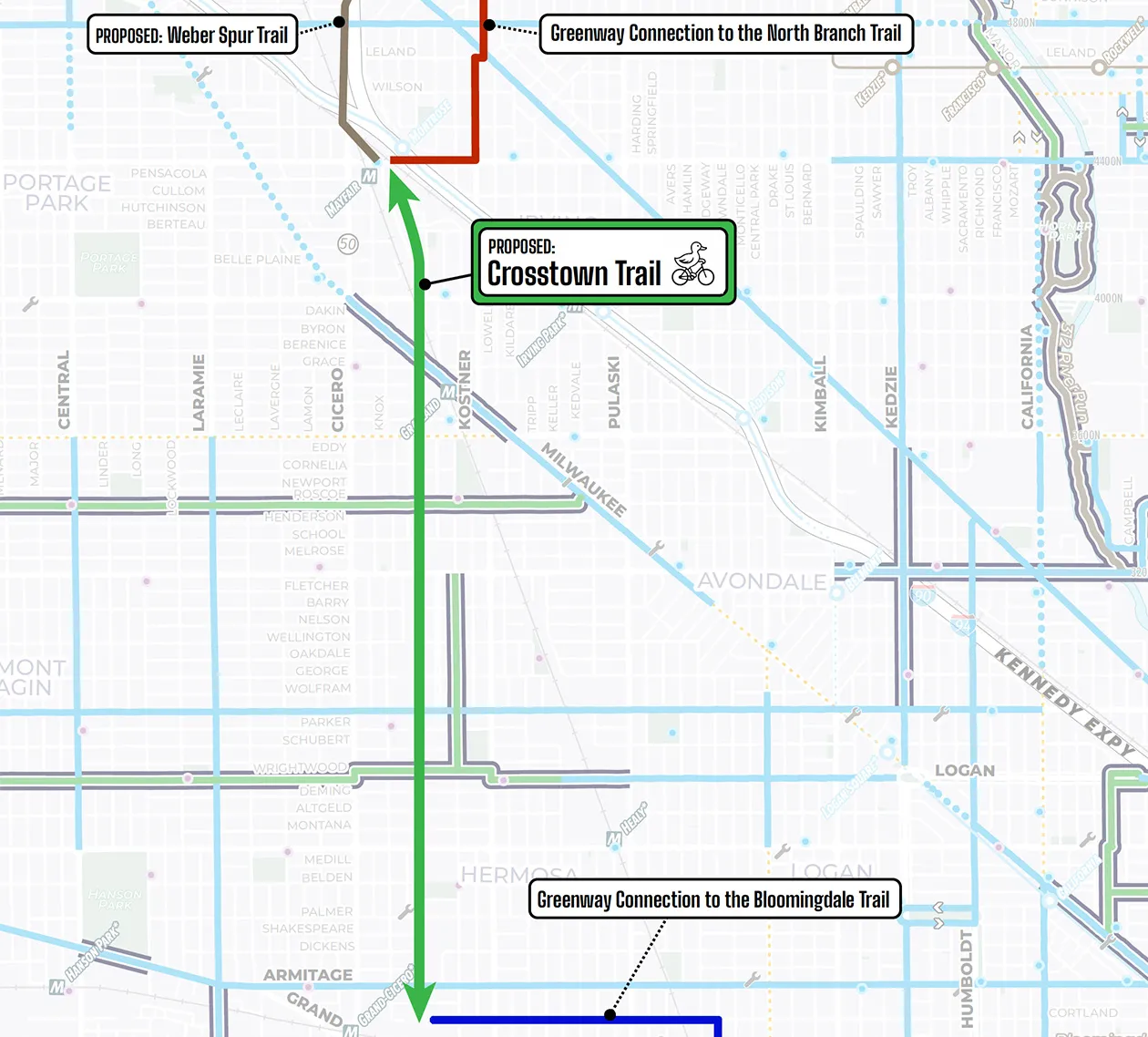
The Crosstown Trail is a 3.2-mile project on an underused rail line just east of Cicero Ave. from Montrose to Armitage on the Northwest Side. It will connect to The 606, the North Branch Trail, and the future Weber Spur Trail.
Jim Franke from Friends of the Crosstown Trail calls it the “baby of the block” amongst the four projects, but its legacy dates to the Richard J. Daley Administration, when the city planned an expressway along the same corridor.
“The community successfully stopped [the expressway] project — it was kind of the first great highway revolt in America,” said Franke. “So we’ve adopted the duck that was [the revolt’s] mascot, and the name ‘The Crosstown Trail.’”
In the past year, Friends of the Crosstown Trail has gathered 5,000 signatures of support, held 17 booth events, and held 20 community and agency meetings, including a town hall attended by 12 supporting elected officials.
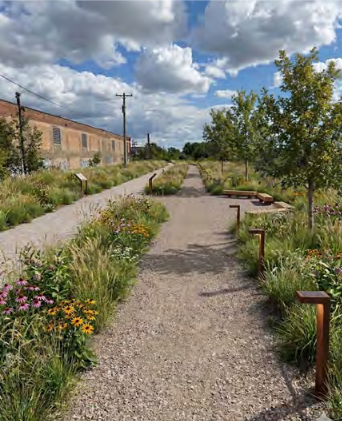
The community group has also created a vision document, which lays out a design, including raised soil mounds to add elevation, ADA-compliant access points, and a total easement of about 100 ft, possibly allowing separated paths.
Next, the group is planning to canvas 2,000 nearby homes, hold more booth events and community and agency meetings, and publish a short film, drone footage, and 3D trail rendering.
THE ENGLEWOOD NATURE TRAIL
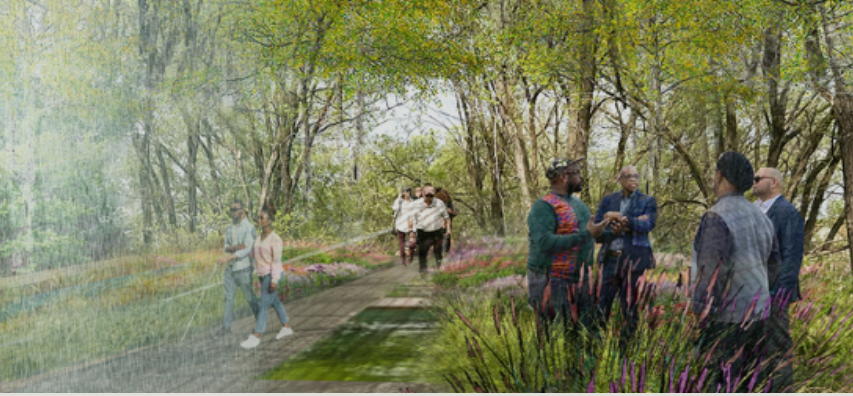
The Englewood Nature Trail is a 1.7-mile project turning a connector rail line closed since the 1960s into a trail. It will be located between 58th and 59th from Wallace St. to Hoyne Ave.
“I feel like I’ve been a grandfather [of the project] because it’s been many years of advocacy, of planning, and we are almost at the final stretch,” said Anton Seals Jr., co-founder of Grow Greater Englewood.
The story of the trail starts in the early 2000s when community members pushed the city to take back the land from Norfolk Southern Railway. In 2009, Chicago’s Centennial Edition of the Plan of Chicago laid out a general vision for the trail, after which the city paid for a concept plan and impact assessment.
Grow Greater Englewood formed in 2018 to help ready the project and ensure it was community led.
“Usually the process goes — ‘we’ll do all the important work and see if the community likes it,’” said Seals. “We were like, that’s not gonna do it for us. We need to be at the table from the very beginning to the end.”
Not only will the trail provide an active transportation corridor, Grow Greater Englewood plans for it to anchor a larger Englewood Agro-Eco District, turning vacant lots into an urban agriculture zone.
The district would be the first of its kind in the country, acting as an economic catalyst for the neighborhood. Because large green infrastructure projects can spur gentrification, the Englewood Agro-Eco District includes plans to stabilize existing housing, build affordable and public housing, and honor the neighborhood’s African-American history and culture.
The city and Grow Greater Englewood secured a federal RAISE grant in 2022, and the project is winding down the design phase. This year, the city is putting out a bid for construction, and expects to break ground in spring 2027.
THE BRONZEVILLE TRAIL
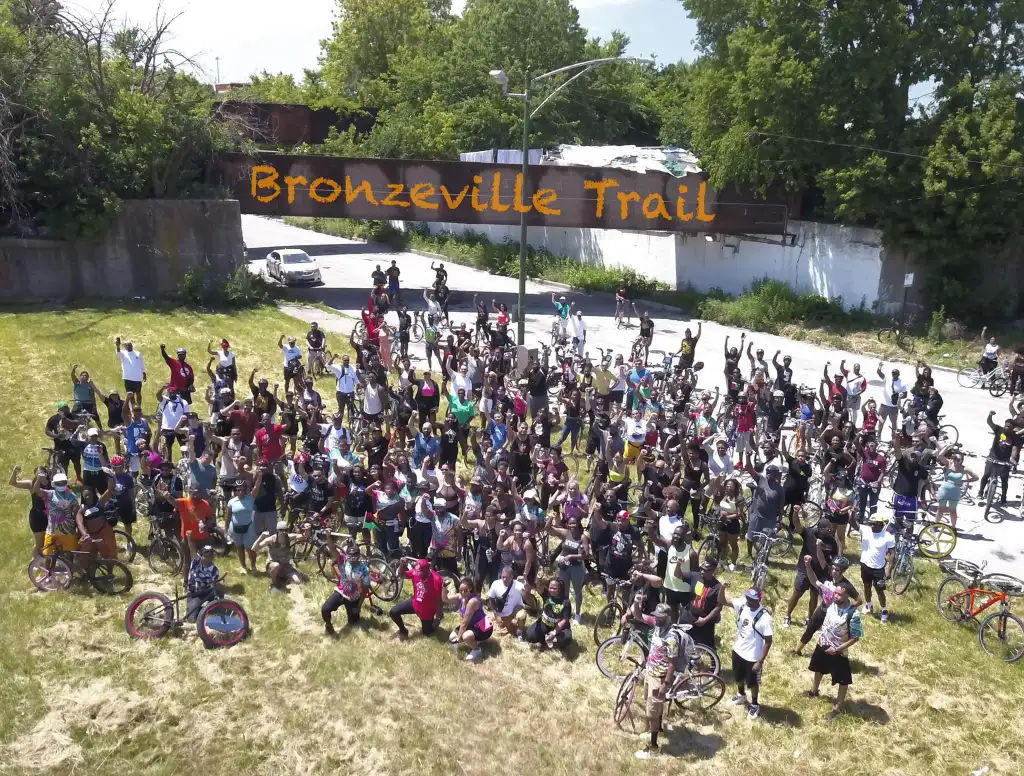
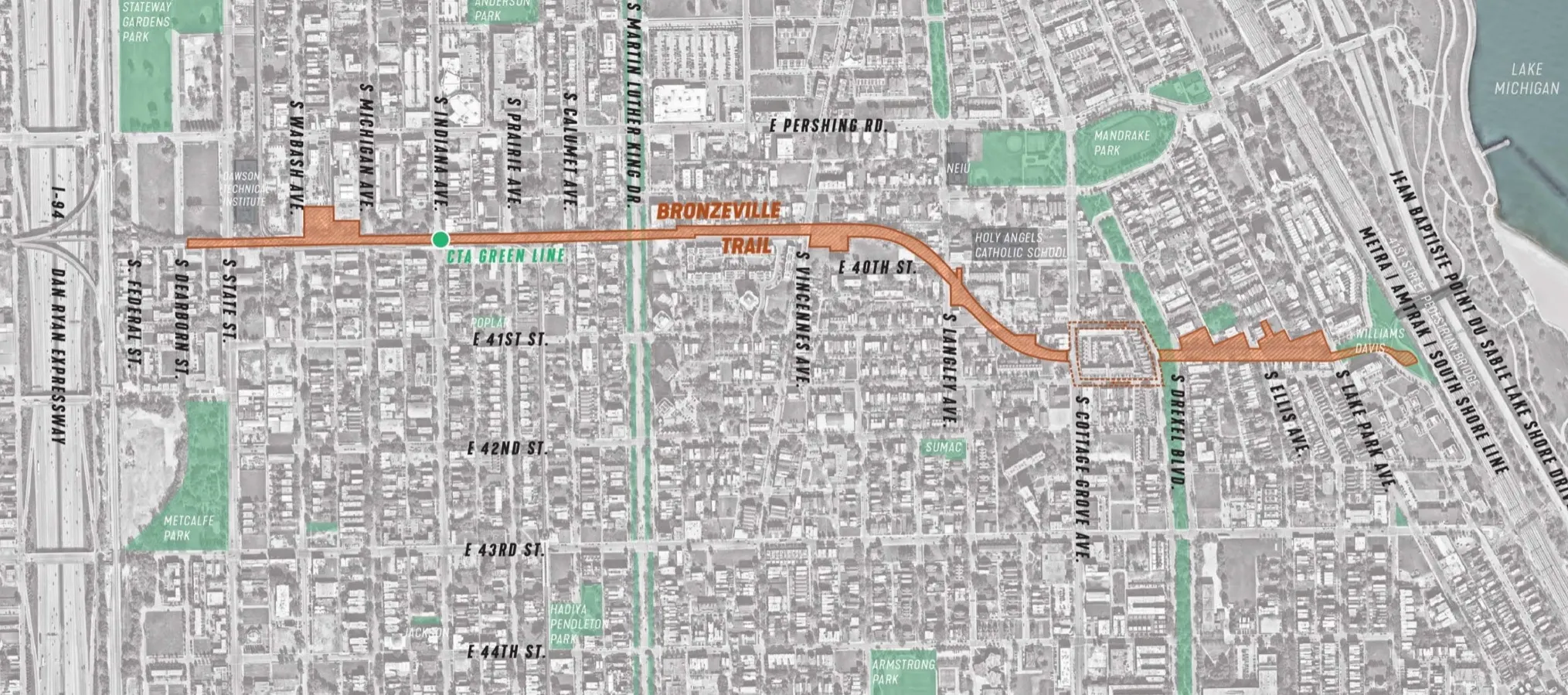
The Bronzeville Trail is a 2-mile project that will turn the abandoned Kenwood “L” Line embankment into a trail along 40th and 41st between Dearborn St. and Lake Park Ave., connecting the neighborhood and communities west of the Dan Ryan Expressway to the Lakefront Trail.
The rail line was built in 1907 to serve the meat packing industry. In 1947, it was transformed into a passenger rail route, which lasted for 10 years. After more than six decades of neglect, community members came together to form the Bronzeville Trail Task Force in 2020.
John E. Adams, founder of the Bronzeville Trail Task Force, said that the trail will honor the community’s history as a Black Metropolis and the embankment’s backstory as a railway.
Thanks to the efforts of the task force, the project received endorsements from every elected official with jurisdiction over the project, and Alderwoman Pat Dowell (3rd Ward) connected the group to Maurice Cox, then-director of Chicago’s Department of Planning and Development.
“We really were activists in getting the city to pay attention,” Adams said.
In 2021, the task force learned the project area was already government owned. A few months later, a feasibility study found that it would cost the city more to tear the embankment down than it would to turn it into a trail, and in 2024, the city agreed to spend $5 million on a framework plan expected by the end of this year.
The task force discovered that back in 2012, another community group commissioned an EPA-funded environmental study that found the embankment was contaminated with railroad-related pollutants, creating poor air quality.
A new environmental study funded by Cook County is slated to be completed by this fall, and the group hopes to use that to secure funding for remediation.
The next step in the planning process is a public event in early June that will provide updates on local priorities involving economic development, historic preservation, and other goals near the trail. The public is invited to the Bronzeville Trail Framework Plan Open House on June 3.
THE WEBER SPUR TRAIL
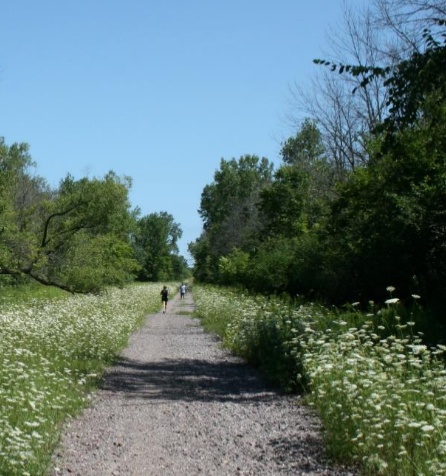
The Weber Spur Trail is a 2-mile project running diagonally along an abandoned Union Pacific Railroad line from Devon to Elston Ave. — connecting 34 miles of trail from the Sauganash Valley Line Trail, to the Union Pacific Recreation Path, to the North Branch Trail through Evanston, Skokie, Lincolnwood, and Chicago.
Lubra Benak, director of livable streets at the Chicago Department of Transportation (CDOT), said the biggest barrier in the development of the Weber Spur Trail has been land acquisition.
While Union Pacific abandoned the railway almost 20 years ago, it still owns the right of way, and the city has been negotiating over it for years.
The design phase of the project kicked off more than a decade ago but paused after land negotiations stalled. Since then, Benak said progress with Union Pacific has been “slow but steady.”
So far, CDOT has completed most of the preliminary engineering and environmental impact assessment phase of the project, including environmental studies and trail design of aspects such as access points and bridge inspections.
Next, a project development report will go to the Federal Highway Administration (FHWA) and Illinois Department of Transportation (IDOT) for approval, followed by detailed design engineering, further property owner coordination, an environmental remediation plan, and finally construction. The city will incorporate public engagement at every step of development.
Funding will be another hurdle — with some federal dollars already committed, but more needed for construction. Benak said if the city can secure funding and successfully acquire the land from Union Pacific, we could see a project as early as 2030.
But, she cautioned, “all those things have to line up, so fingers crossed everything continues to go positively.”
This post was authored by Alyssa Edes, Advocacy and Policy Fellow.
Photos courtesy of the Bronzeville Trail Taskforce, the Crosstown Trail, and the Chicago Department of Transportation.