While speaking to the City Club of Chicago in January, CTA Acting President Nora Leerhsen probably surprised a few people in the audience when she mentioned her experience participating in a recent Second City comedy show called “Save Chicago Transit.”
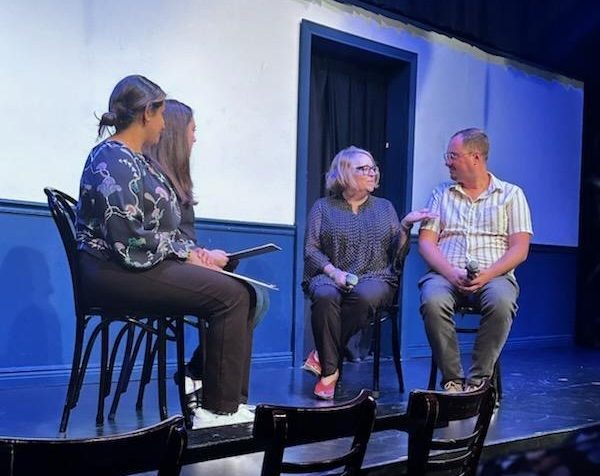
The comedy show included a series of skits looking at the local transit system’s looming fiscal cliff, followed by a discussion with Leerhsen. Guests for other nights of the show included State Representative Mary Beth Canty, State Representative Eva-Dina Delgado, Better Streets Chicago Executive Director Kyle Lucas, and our very own Executive Director Amy Rynell.
The writer and co-director of the show, Ellen Steinke, now has a new Second City show called “Safe Streets: The Comedy Show. Why it sucks to walk or drive in Chicago and how we can fix it.” We recently had a chance to chat with Steinke about the new show and what she hopes the audience will take away from it.
Please tell us about the new show and what inspired it
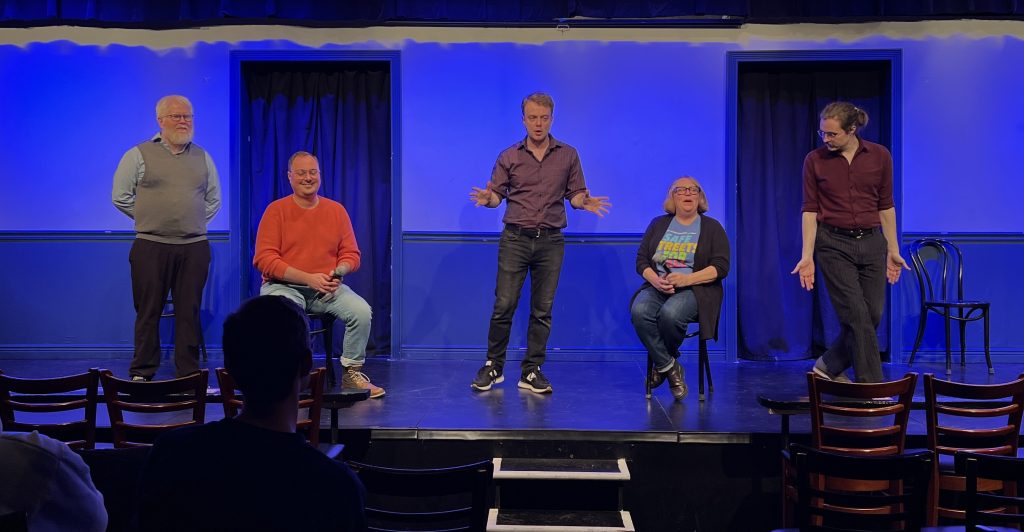
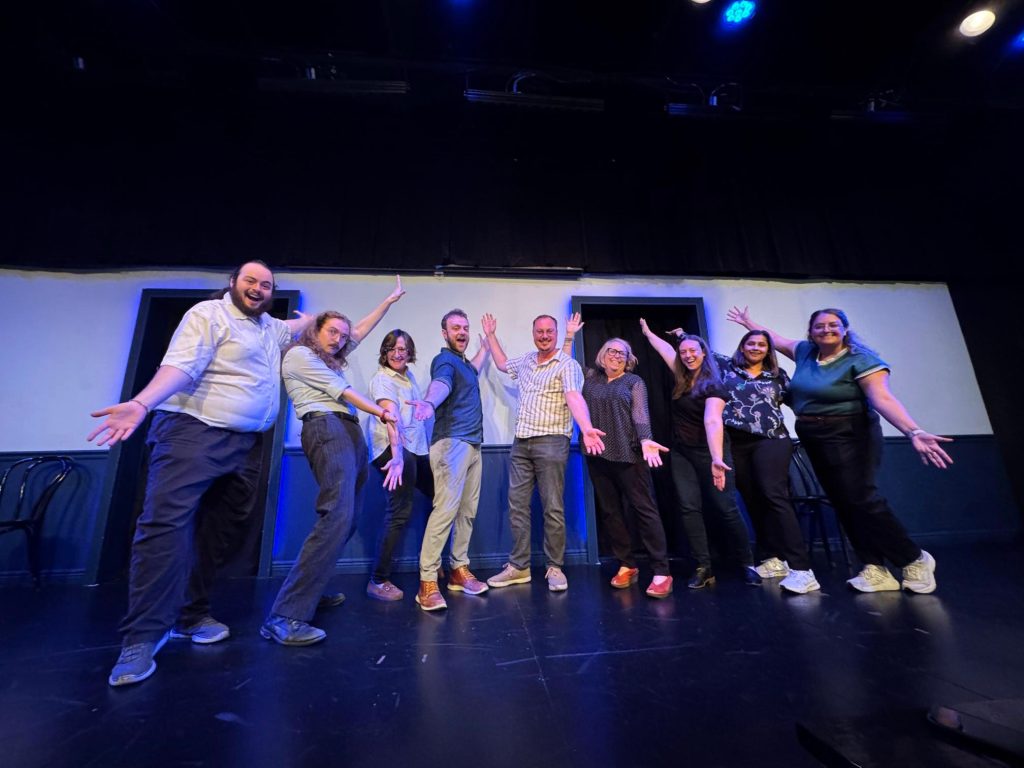
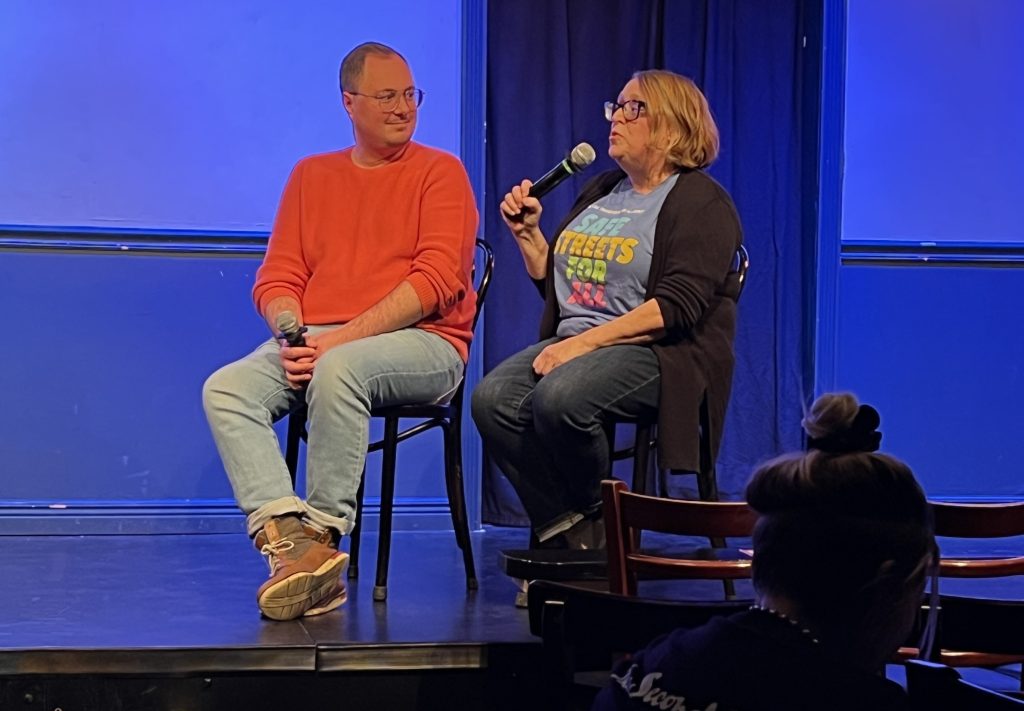
Ellen Steinke: “Safe Streets: The Comedy Show” is a sketch comedy + interview show that explores why it can feel so stressful to walk, bike, take transit, or drive in Chicago, and what we can do about it. The show consists of original sketches, improv, and interviews featuring local advocacy organizations and civic leaders. So far we’ve hosted Better Streets Chicago and Active Transportation Alliance, and on February 15 we’ll be joined by CTA Acting President Nora Leerhsen and State Senator Mike Simmons.
The show was inspired by the fact that traffic violence and street design affect everyone, but the conversations around them are often either depressing, overly technical, or dominated by loud misinformation. I wanted to create something that felt inviting and energizing; a place where people can learn, laugh, and leave feeling more confident about how to support safer streets in their own neighborhoods.
How do you balance entertaining people while encouraging them to think differently about their streets and communities?
ES: Satire is built for this. Comedy helps people notice the absurd things we’ve normalized, such as like how dangerous street design gets treated as inevitable, or how a small safety change can turn into a neighborhood controversy.
Structurally, the show is basically an “explainer essay” with sketches interspersed to underline the key ideas. We use humor to open people up emotionally, then we ground the topic with interviews so it stays connected to real policy, real constraints, and real solutions.
The goal is for the audience to have fun, but also to walk away with language for what they already sense: that the status quo isn’t the only option, and that safer streets are practical, not radical.
Why do you think comedy is a good tool for conversations about safety and infrastructure?
ES: Because these conversations usually come with a lot of tension. People show up to civic meetings already defensive, angry, or overwhelmed. Comedy lowers the temperature. It gives people a way to engage without feeling like they’re being lectured or recruited.
It’s also a powerful truth-telling tool. A sketch can highlight the contradictions in our current system in a way that’s immediately understandable and because it’s funny, people actually remember it.
Comedy also creates a different environment for civic leaders. Instead of only interacting with the public in stressful meetings or crisis moments, we get to meet in a setting that’s supportive, curious, and personal. That’s pretty rare and it changes what’s possible in the room.
If city leaders were in the audience, what message would you most want them to hear?
ES: Most people are in favor of safer streets and/or are persuadable but the opposition is just louder.
Chicagoans want safer streets and better transit. The problem is that public meetings often over-represent the most angry, misinformed, or change-resistant voices. That can make leaders feel like they’re walking into a political minefield when they propose something as basic as a bus lane or a crosswalk upgrade.
Our message is that the public is not the enemy here. People want a city that’s easier to live in. If you communicate clearly, lead with shared values, and show how the changes benefit everyone, you’ll have more support than you think.
How do you hope the post-show discussion with local advocates will deepen the audience’s understanding or inspire action?
ES: A lot of people already care about street safety and transit. What they often don’t have is language, context, or a clear path for what to do next.
The post-show discussion helps connect the dots. It gives people a bigger picture of why these issues keep coming up, what solutions are actually on the table, and how local decisions get made.
Most importantly, it turns a good night out into something that can ripple outward. When people leave the theater with a story they can repeat and a concrete call to action they’re more likely to speak up at the next community meeting, support a street safety project in their ward, or get involved with an advocacy group.
Do you have plans for more shows focusing on safe streets and active transportation?
ES: Yes. Safe streets and transit are a core focus for us, and we’re planning additional shows after this run.
We’re also interested in going deeper on specific themes like bus priority, speed limits, vehicle size (SUV/Trucks), delivery reform, and transit safety. But part of the show’s strength is focusing on timely topics — so we’ll see what comes up in the city-wide conversion. But overall, goal is to keep building a format that’s entertaining, accessible, and useful for Chicagoans who want a safer, more functional city.